Custom AI vision models
Object detection, segmentation, classification and anomaly localization — trained and validated on your data.
Thermal, sonar, LiDAR, SWIR, endoscopy, microscopy — and ordinary video too. We take your data and give you a working prototype in weeks.
We break a hard vision problem into solvable AI tasks, then build the models, pipelines and apps that run them.
Object detection, segmentation, classification and anomaly localization — trained and validated on your data.
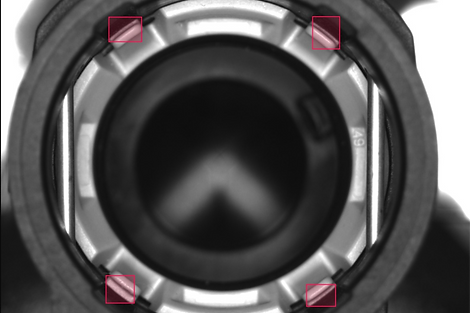
Defect detection for manufacturing and maintenance: connectors, coatings, curing, wear, fabric and more.
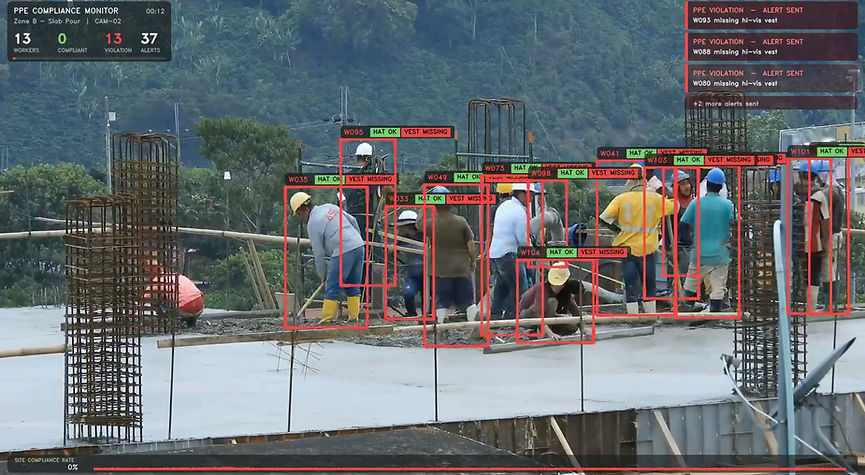
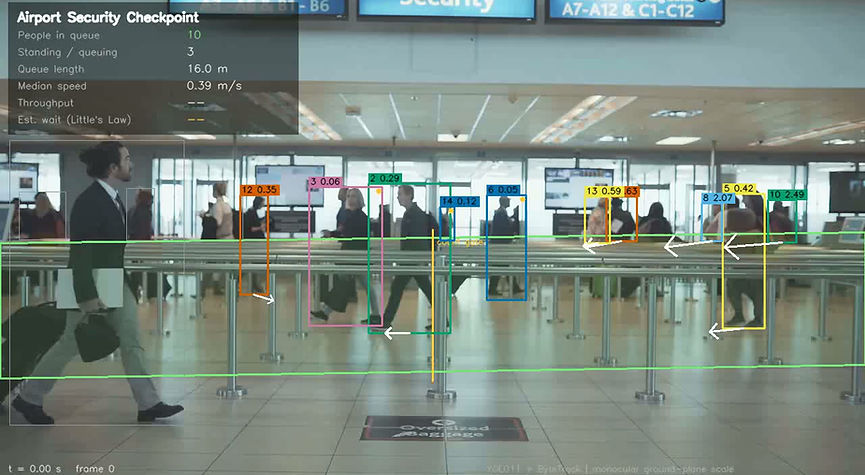
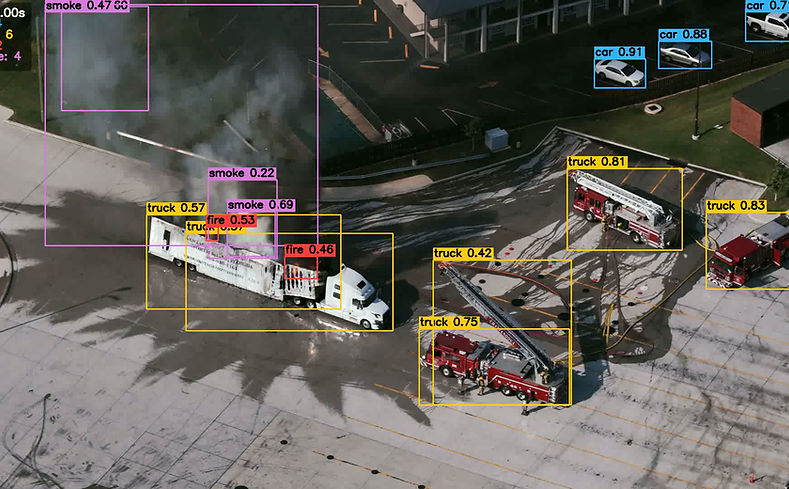
Real-time monitoring from cameras you already own: PPE compliance, queues and crowd flow, fire and smoke, incident review.
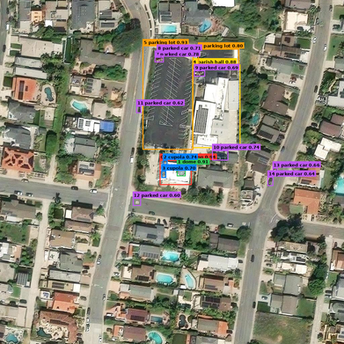
Georeferenced detection in aerial imagery, photogrammetry and 3D models, LiDAR point-cloud processing.
Sensor data capture, annotation, augmentation and dataset quality audits, so your models learn from the right data.
Feasibility and architecture reviews, patent strategy and drafting, and SBIR/DoD proposal support.
Image quality, anomaly localization and device-side AI.
Explore →Sonar, thermal and aerial detection, SBIR support.
Explore →In-line defect detection and inspection automation.
Explore →Georeferenced detection, photogrammetry, 3D models.
Explore →A sample of the systems we've delivered for industry, infrastructure, healthcare and startups.
 Drones & geospatial
 Construction safety
 Operations
 Emergency response
 Manufacturing QA
 Medical imaging
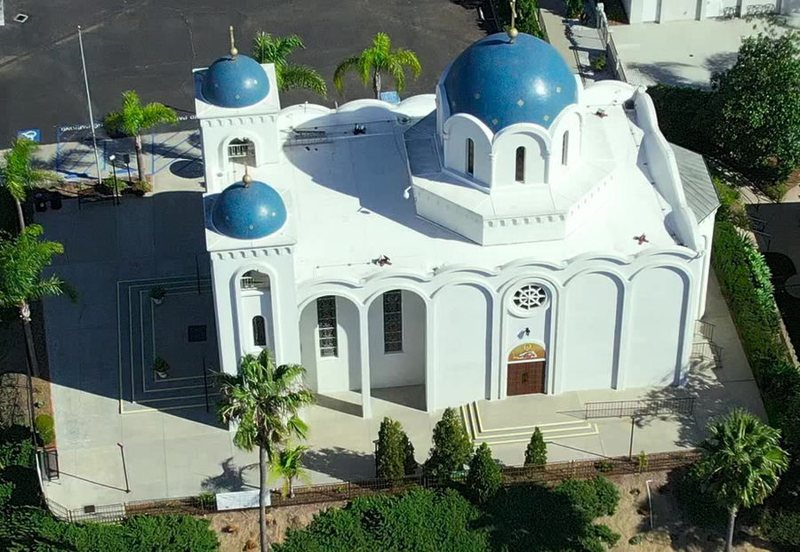 Drones & 3D
We turned raw drone footage of a historic San Diego landmark into an accurate 3D model, working around wind and changing light. Models like this help preserve historic buildings and support urban planning and architectural studies.
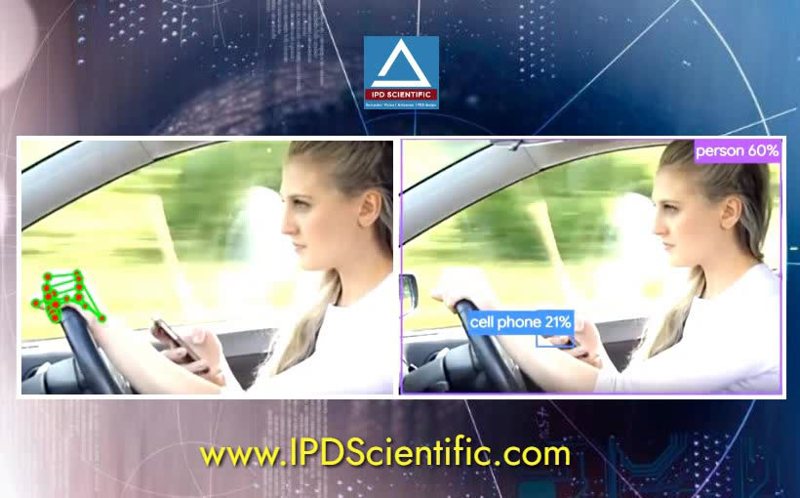 Road safety
A computer vision system that spots a driver holding or using a cell phone behind the wheel, from an in-car camera.
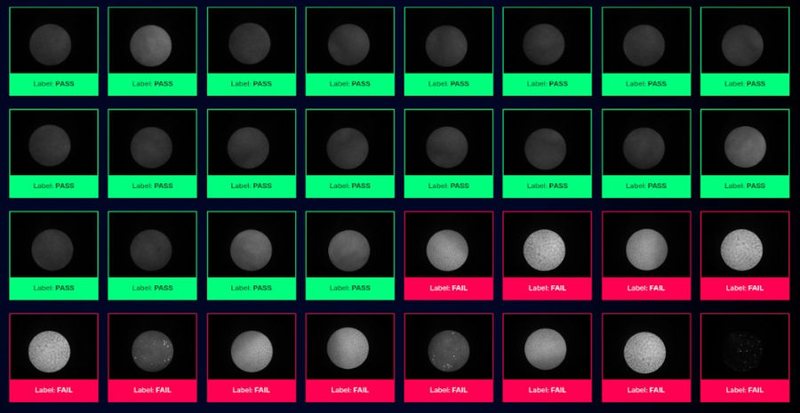 Manufacturing QA
A camera system that checks on the production line whether UV epoxy has cured properly. It replaces manual checks, so fewer bad parts slip through.
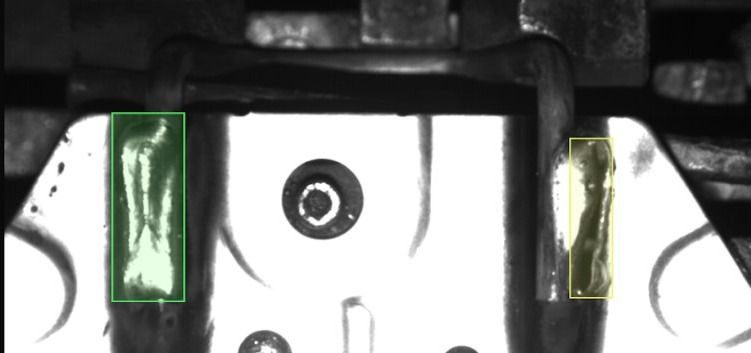 Manufacturing QA
Finds and measures metal wear caused by friction, so maintenance can be planned before parts fail and downtime is cut.
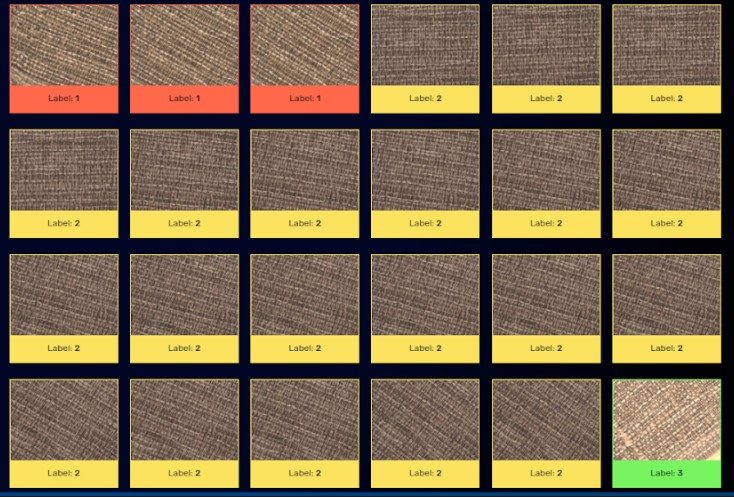 Manufacturing QA
Machine learning that sorts fabric weaves and spots flaws, inconsistencies and irregularities in real time on the production line.
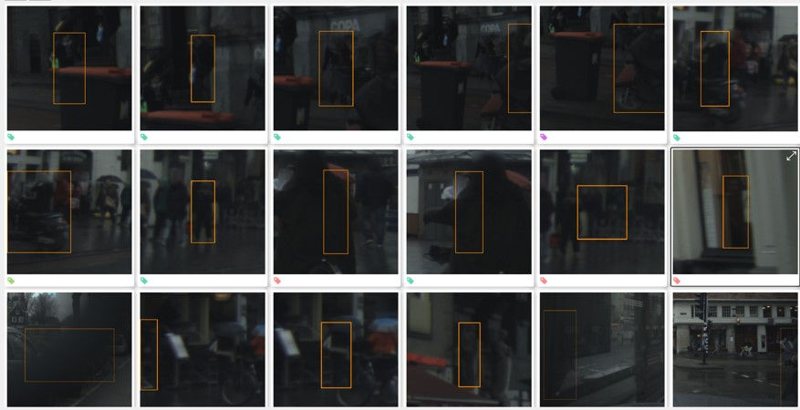 Autonomous driving
We check whether training data for autonomous driving covers the hard cases: objects partly hidden, shadows and low light. Our work includes quality checks of segmentation labels and 2D video annotation for automotive teams.
We help companies applying for SBIR DoD grants: choosing the right sensors, defining the technical requirements, and writing a strong proposal for adding AI and computer vision.
Patent research, strategy advice and drafting of patent applications for AI and computer vision inventions, so start-ups can protect what they build.
Professionally designed, custom advertisements that help small businesses attract more customers, online and in their local community.
Start from something that already works. Each one comes with annotated video, a data file and a dashboard, and we tune it on your own footage.
Checks hard hats and hi-vis vests on the cameras you already have. Sends a photo alert with the zone and time only when a violation is confirmed, plus an end-of-shift compliance report.
Ask for a demo →Head count, queue length, walking speed, people per minute, estimated wait, dwell time and a density heat map, from one fixed camera.
Ask for a demo →Watches a defined stretch of road or highway and detects when traffic starts to back up: where the queue starts and ends, how long it is, and how fast it moves. Alerts when a queue forms, for work zones, incidents and traffic operations.
Ask for a demo →Finds the cones, draws the merge line through them, shades the closed lane and shows the merge direction and distance to the taper in metres. Works from shape alone, even on black-and-white video.
Ask for a demo →Several detectors run on every frame and merge into one result: cars, trucks, fire and smoke. Returns annotated video plus a frame-by-frame data file you can search.
Ask for a demo →Finds rust on large assets from drone imagery, grades how severe it is and measures the percent of surface affected, so repairs can be planned.
Ask for a demo →A camera at the dock door measures how full each outgoing trailer is: fill percentage, wasted cubic feet and the cost of shipping air per load.
Ask for a demo →Counts bees going in and out of the hive, spots pollen loads and tracks the drone-to-worker ratio, to show colony health for commercial pollination.
Ask for a demo →That's exactly what the free 15 minutes are for. Bring a photo, a short video clip or just a description — we'll tell you honestly whether it's worth building, and what a sensible first step would be.
No surprises: here is every step from the first call to a working system. You decide at each step whether to go on.
You tell us what you need to detect or measure. We tell you honestly whether computer vision can do it, and which approach we'd use.
We sign your NDA. You share a few images or a short clip — or we come on site in San Diego County and collect a sample with our own sensors.
Scope, price and timeline for the first step: a fixed-scope feasibility study. You only commit to that step.
Feasibility, prototype, then production. Each phase has a clear end point, and you can stop after any of them.
Most clients start with a feasibility study, so nobody commits to a build that the data can't support.
Typically 2–3 weeks
Typically 6–10 weeks
Scoped per project
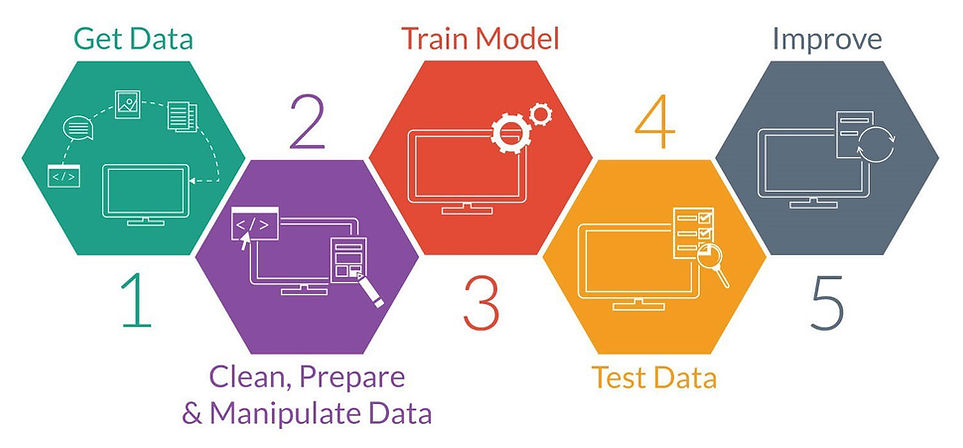
Every phase follows the same loop — get data, clean and prepare it, train, test, improve — and you see results on your own footage before anything goes into production.
Ordinary photos are easy. We work across the spectrum — and we own and operate the equipment. Tap a sensor to see what we do with it.

Iryna founded IPD Scientific in 2022 and leads every project personally. She has 10+ years of experience building AI vision systems in Python, PyTorch, TensorFlow and MATLAB, across electro-optical, multispectral, thermal, sonar, LiDAR, microscopy and medical imagery — from first feasibility study through deployment, including real-time edge deployment with CUDA, TensorRT and ONNX.
Before IPD Scientific she was a Principal Investigator at the U.S. Navy's NAVWAR and a Senior Data Scientist in 3D imaging at Decision Sciences. She holds 2 issued and 5 filed U.S. patents, has published peer-reviewed research (Springer) on deep learning for sonar imagery, and mentors as a SCORE advisor and science fair judge.
Connect with Iryna on LinkedIn →
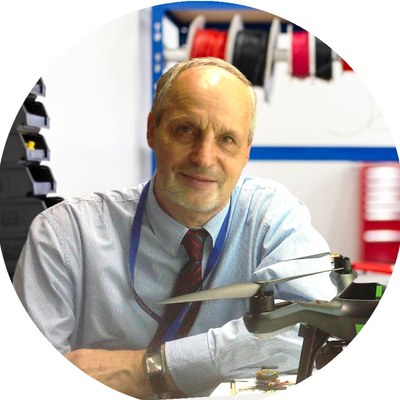
Senior Consultant — Optics, Electronics & Radar
20+ years in high-speed electronics, electro-optics and RF/microwave design. 10 U.S. patents and 200+ publications; author of Seeing Invisible: Advanced Antenna Arrays. He leads the antenna and radar inventions available for license.
Pavlo has been Principal Investigator on U.S. Navy, Air Force and DoD research programs as a Senior Scientist at AETHER, AMPAC and Compass Systems, and developed new passive-radar, tracking and imaging concepts as Principal Scientist at Planar Monolithics Industries. Earlier he was Head of Department and Vice-Dean at Vinnitsa National Technical University.

Marketing & Operations Assistant
Allison supports IPD Scientific's marketing, client communication and day-to-day operations. She studies business at Santa Clara University's Leavey School of Business (class of 2030), where she is also an NCAA student-athlete.
The experience our team brings to every project.
As Principal Investigator, Iryna built deep neural networks that found corrosion, underwater mines in sonar images, and fake images, with up to 98% detection accuracy. Her corrosion detection method is now used by the Navy with drones and 3D models.
Improved muon tomography imaging, which uses natural cosmic-ray particles to see inside dense objects. Built exact-size 3D models of vehicles and combined them with LiDAR and photogrammetry in field tests.
Set up electro-optical multispectral cameras in the field, collected data, and wrote automated image processing in MATLAB: enhancement, segmentation and feature extraction.
Modeled data in Systems Tool Kit and built time-series and autoregressive forecasting models in R and Python.
Led U.S. Navy, Air Force and DoD research projects on antenna arrays, passive radar and imaging, resulting in 10 U.S. patents and 200+ publications.
What we've learned building these systems, with real numbers.
“I hired IPD to help with my AI Vision System, StrikeSure. In just six short weeks, I am now testing my prototype and building a custom Computer Vision System Algorithm.”
“Working with Iryna and the IPD Scientific team was an exceptional experience… Their expertise in AI-based image processing and real-time detection helped transform our early concept into a working prototype.”
“Iryna's background in computer vision for cameras let her effortlessly understand our challenges and what it would take to address them with AI.”
“IPD is not only a leading-edge firm in the field of machine learning and advanced imaging, they are a pleasure to work with.”
Four pending U.S. patents in multi-beam antenna arrays, passive radar and monopulse SAR — open to licensing and partnership.
Every project starts with a small, fixed-scope feasibility study, so you know what you are paying for before anything bigger. After the free 15-minute call we give you a price for that first step. Larger prototypes and production systems are quoted phase by phase.
A feasibility study typically takes 2–3 weeks. A working prototype on your own footage typically takes 6–10 weeks. Production deployment is scoped per project.
Often not. We start with the cameras and footage you already have. If a different sensor would work better, we own and operate thermal, SWIR, multispectral, LiDAR and other equipment, so we can test it before you buy anything.
Yes. We are happy to sign your NDA before you share any images, video or other data.
No. We are based in University City, San Diego, and work with clients across the United States. For projects in San Diego County we can also come on site to collect data with our own equipment.
Yes. We help companies choose sensors, define technical requirements and write the AI and computer vision parts of SBIR and DoD proposals.
You tell us what you need to detect or measure, and you can send a photo or a short clip beforehand. We tell you honestly whether computer vision can do it, which sensor and approach we would use, and what a sensible first step would be.
IPD Scientific is based in University City (UTC), near UC San Diego, Sorrento Valley and Torrey Pines. We work with San Diego defense, biotech, medical device, manufacturing and drone companies, and with clients across the United States.
Because we own and operate our own sensors, we can come to your site anywhere in San Diego County, from La Jolla and Carlsbad to Point Loma and Chula Vista, to collect thermal, SWIR, multispectral, LiDAR or drone data for your project.
IPD Scientific, LLC
8910 University Center Lane, Suite 400
San Diego, CA 92122
858-800-2430 · info@ipdscientific.com
Pick a time that suits you — no forms, no obligation. We'll talk through your problem and tell you whether computer vision is the right tool for it.
You'll get a confirmation and a calendar invite by email.
A few details help us come to the call prepared.